UnderPass

UnderPass Writeup
Table of Contents
1. Service Enumeration
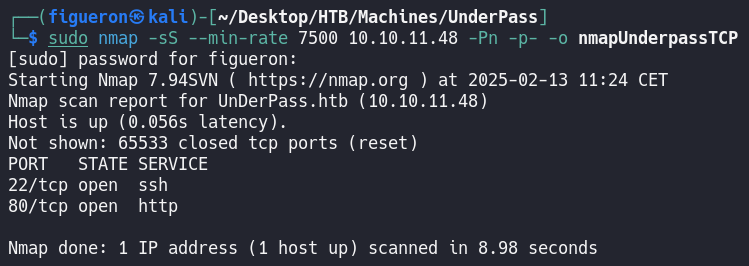
First, we start with the usual nmap. As usual, we have port 80 open, so we add it to /etc/hosts and navigate to the page.
2. Web Recon
We land onto a page that displays the Apache2 Default Page.
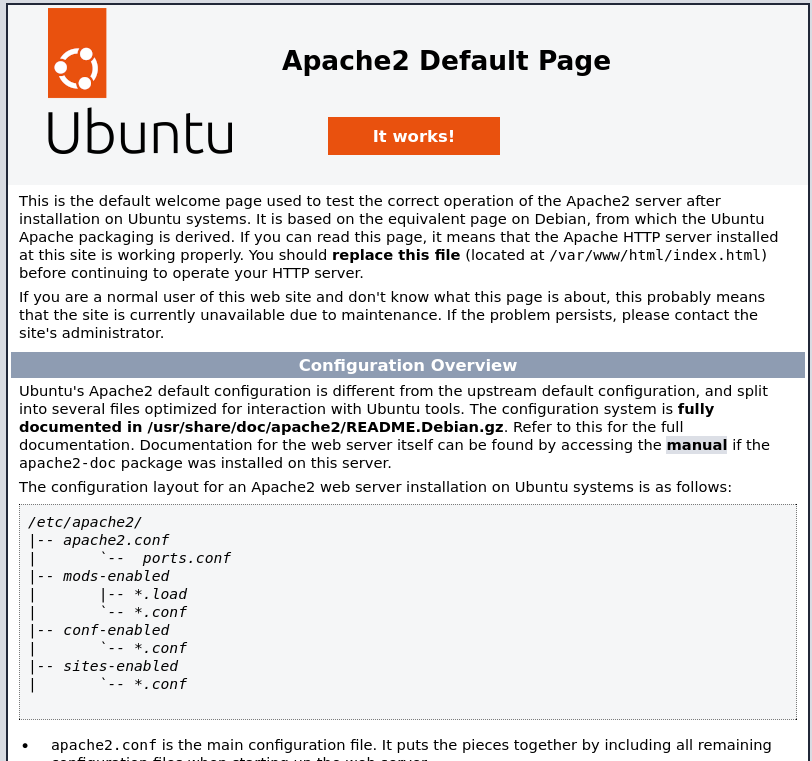
As we can’t do anything here, we start looking for subdomains and web directory searching.
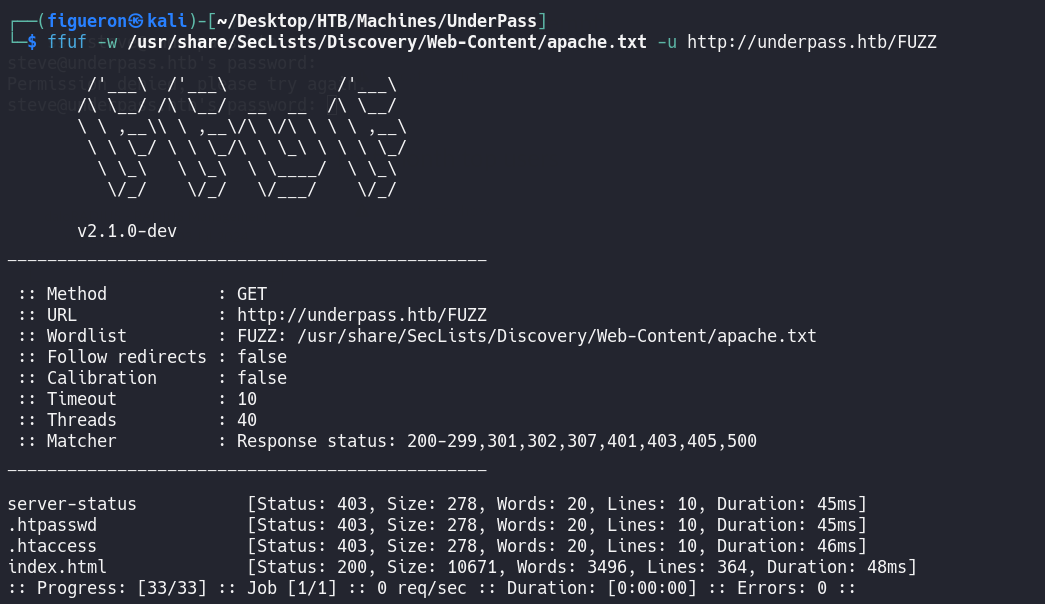
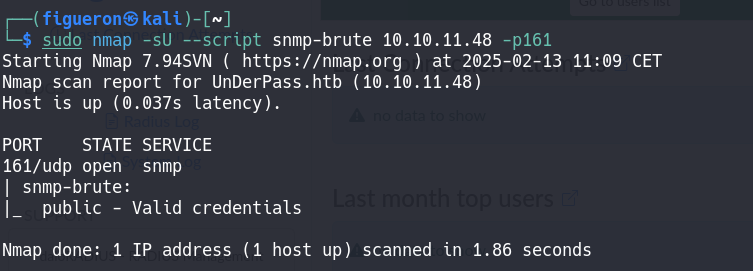
We don’t find any valid subdomain or directory to search. So we go one step back and do another port enumeration, in this case, UDP ports.
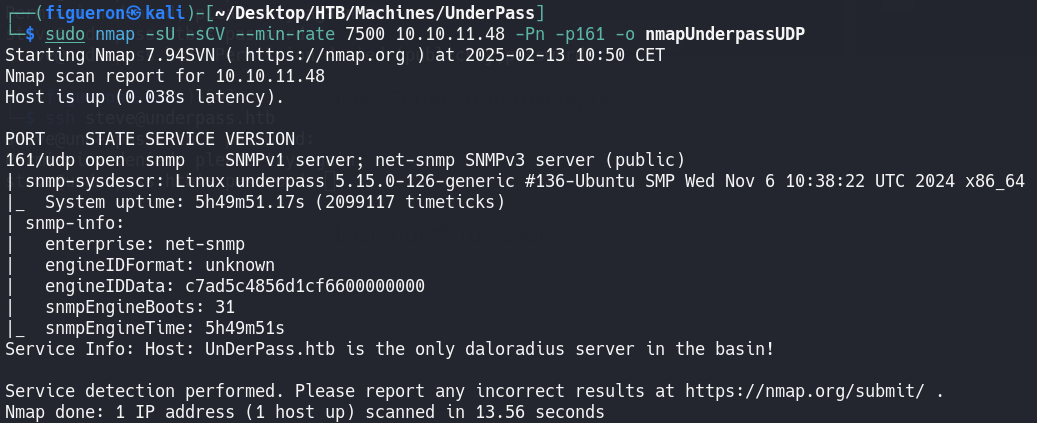
As we can see, we find port 161, which belongs to SNMP open, so we start to enumerate this service and start to search for some info.

Here, the port is giving us a clue, and it’s saying that it has a daloradius server, and after searching what this is, we start looking for that server in the web server.
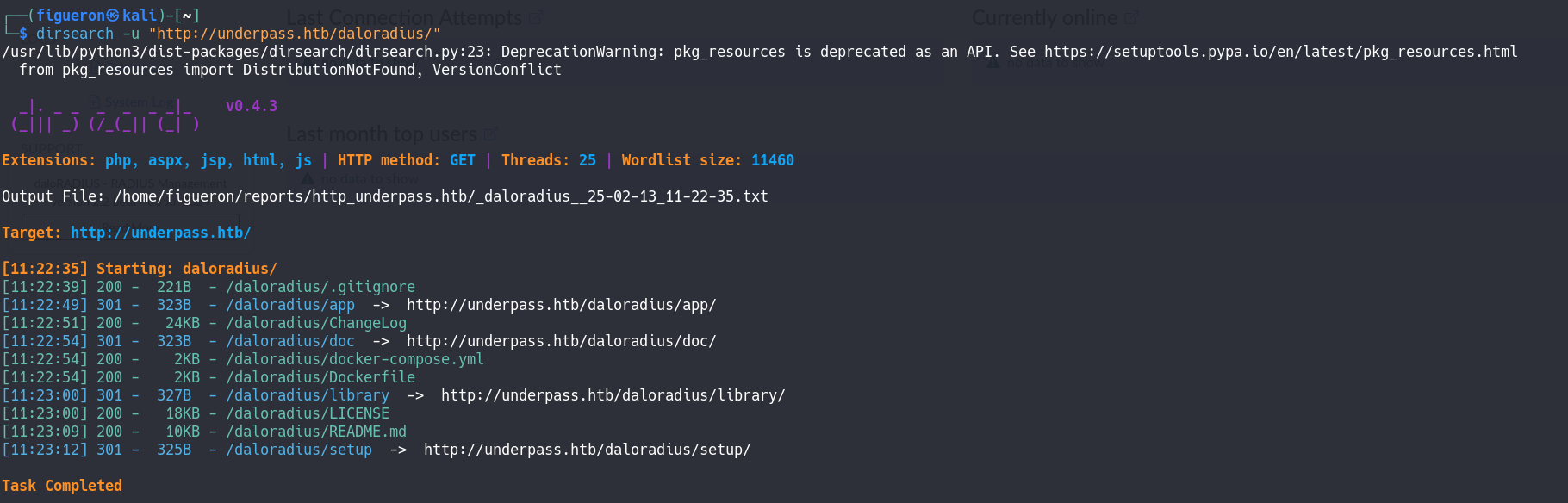
In the first search, we can find a docker-compose.yml and looking at it, we can find some credentials, but I tried them on the SSH and none of them work, so we continue the dirsearch.
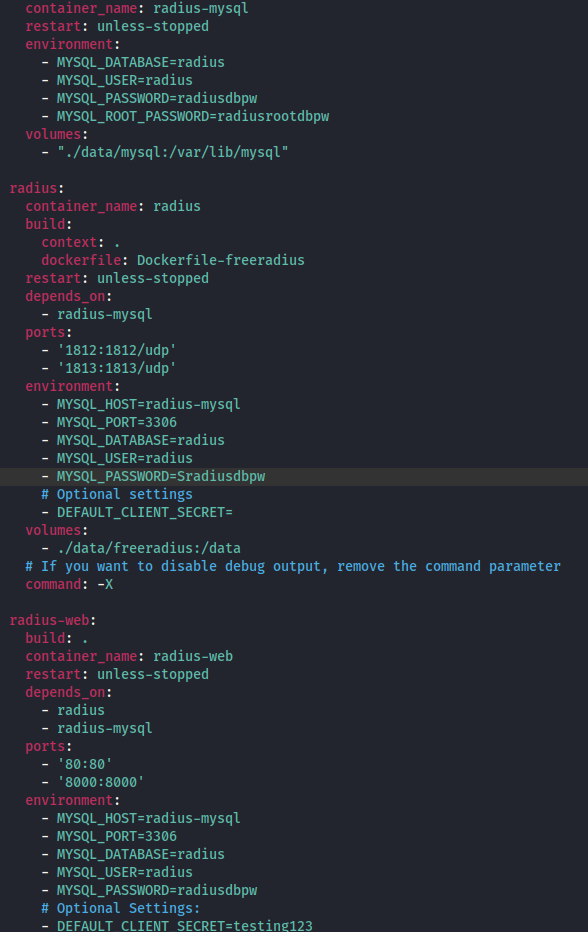
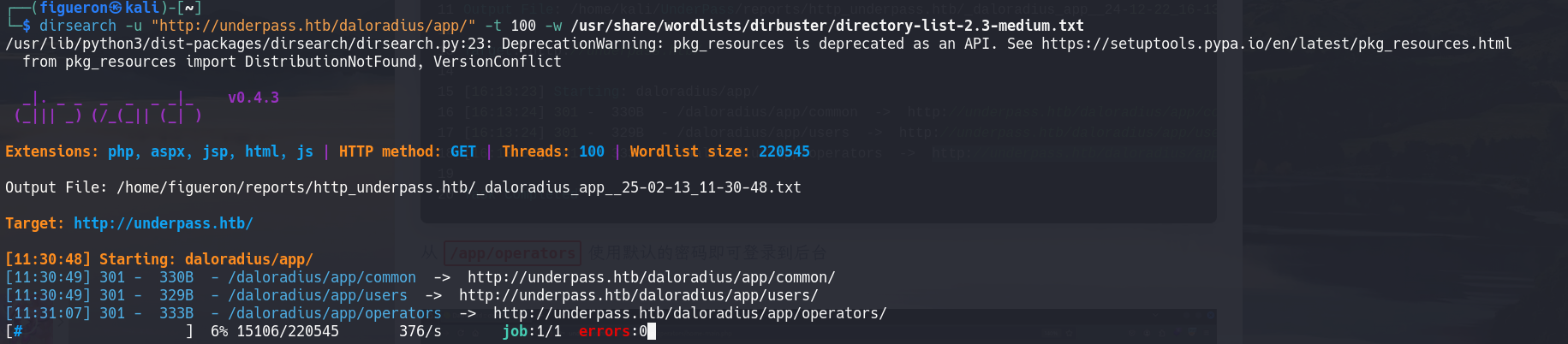
Finally, we find a login page. Here I tried all the password combinations from the .yml from before, but as in the SSH, none worked, so the next step we take is to look for the default credentials and test them. It worked!!
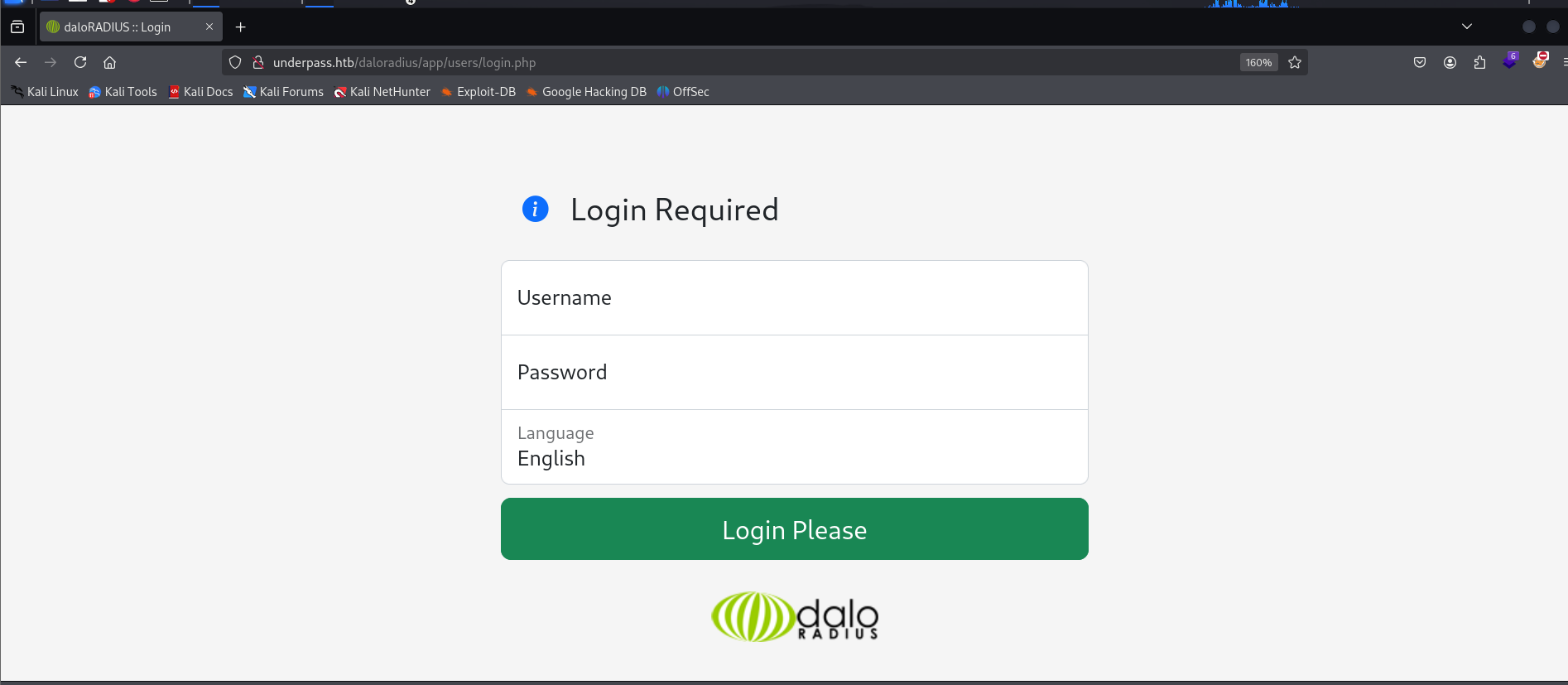
3. Radius UI
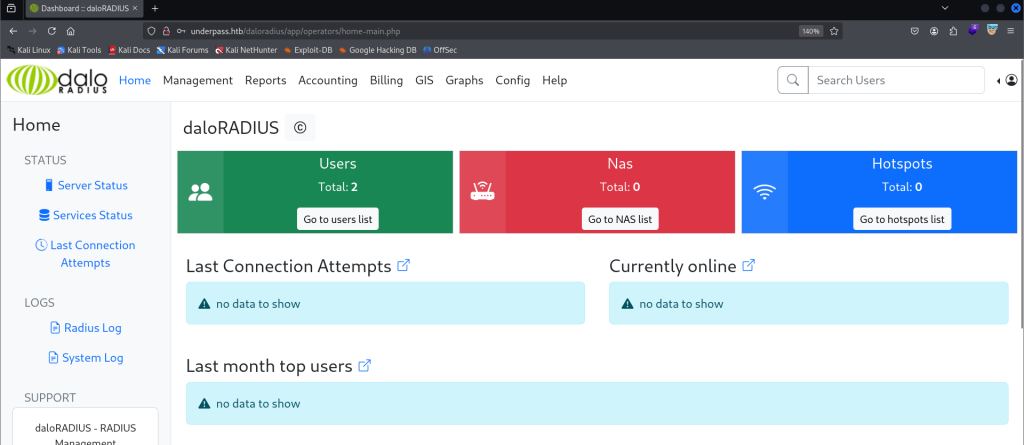
After a long time of trying different things and getting comfortable with the Radius UI, I found the user listing page and tried to create a new user to log in to the page and see that page as a normal user, but it didn’t work. So I tried to crack the password of the user svcMosh.

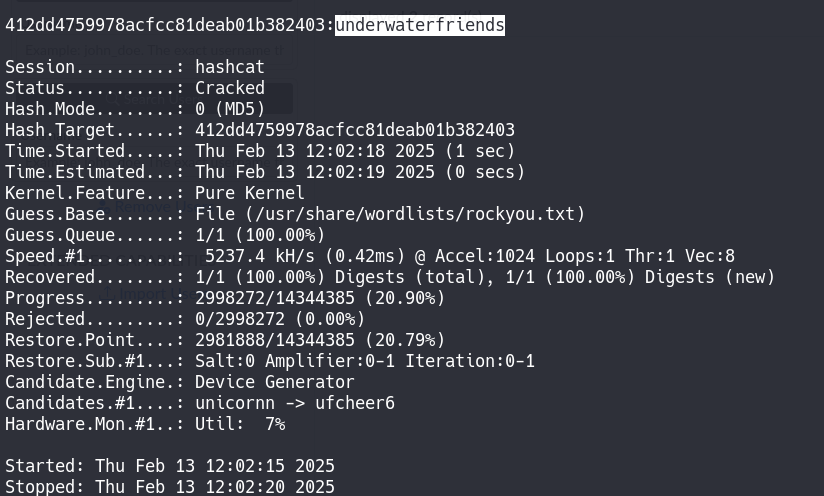
With Hashcat it is super easy to crack it, and trying to log in to SSH with these credentials will work and will let us take the user flag.
4. Privilege Escalation
For privilege escalation, as always, the first thing is to see if we have some sudo permissions by the command sudo -l.

As we can see, mosh-server can be run as sudo for this user, so that will be the privilege escalation vector.
After a bit of researching of mosh and mosh-server, with the proper syntax, it is a very simple command to get a shell with root user, so we just run this command and get the root flag.

Done!!